BY
Supersonic Art
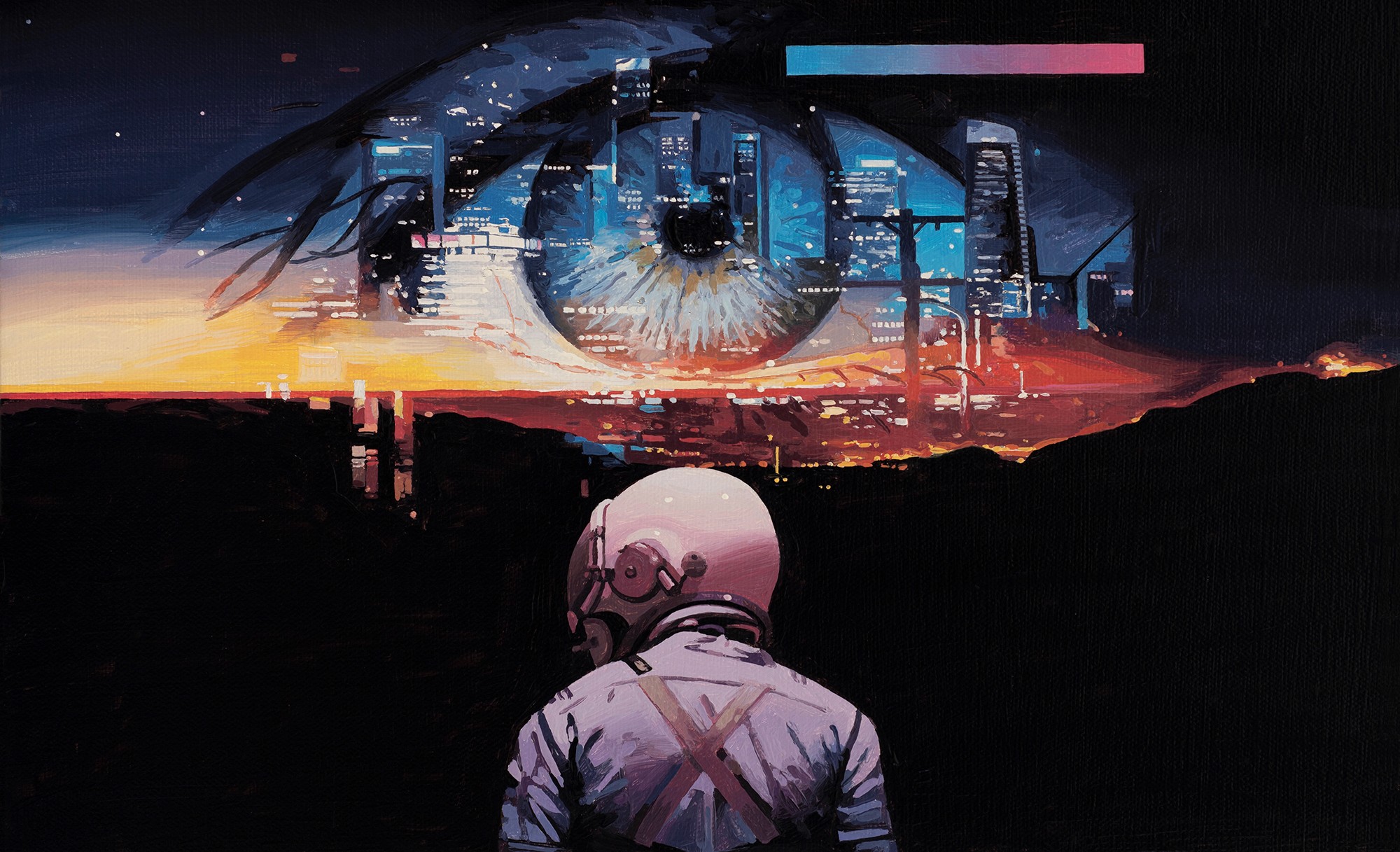
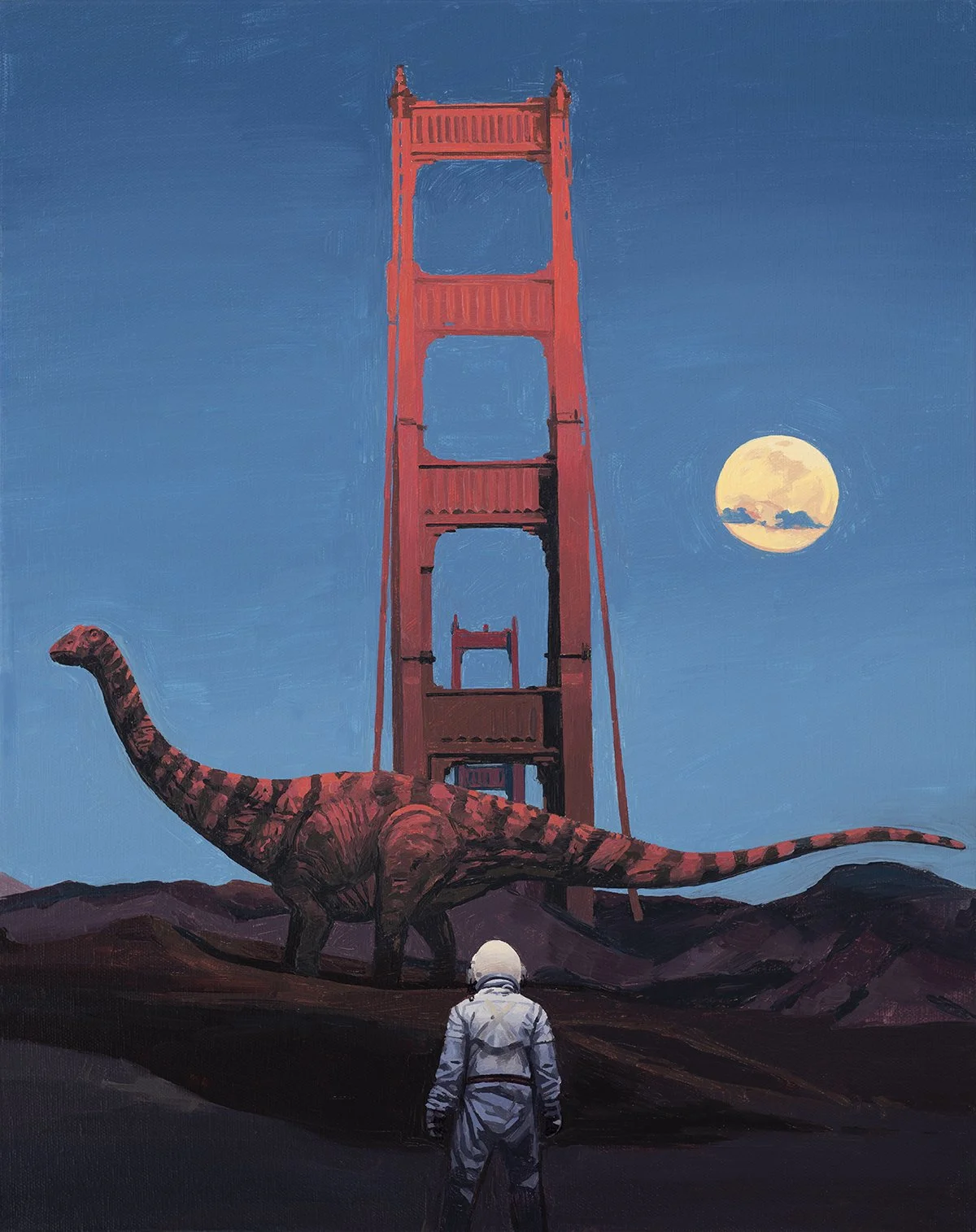
Los Angeles-based artist Scott Listfield has been a part of my everyday life for the past 13 years: An early print of his, "Red Wall," hangs in my studio and his 2017 print, "The Bridge," hangs in our living room. The latter depicts San Francisco Bay as a desert, with the monolithic Golden Gate Bridge standing as a relic of the past as Scott's iconic Astronaut gazes out across strangely familiar landscape. It's one of my all time favorite works of art and somehow gives me nostalgia for something that hasn't even happened (yet).
I’m certainly not alone in feeling this strange pull of nostalgia in Scott’s exceptional paintings. His work has appeared in countless gallery and museum exhibitions and has quietly woven itself into the fabric of contemporary culture, lingering in viewer's and collector's imaginations long after their first encounters. And rightfully so. Scott's work is outstanding, truly unique, and thought provoking time and time again.
I’ve interviewed Scott a few times over the years during my time at The People’s Printshop (and I’m fairly sure we even started one for Supersonic Art that never quite made it to the finish line). But this interview is one of the most open, thoughtful, and genuinely thorough conversations with an artist that I’ve had the privilege to be part of. I'm grateful to know Scott, to be able to experience his artwork, and to be sharing his thoughts here with you. Enjoy.
You’ve mentioned that arriving at college in New Hampshire, you weren’t sure what you wanted to focus on. What made you decide to pursue art? What had your relation to art been before college?
I went to a liberal arts college, not an art school, and upon arriving had no real intention of becoming an artist. But I had always loved drawing. It had never been a thing I took seriously – in part because I didn't know you could, and in part because I never considered myself especially talented. I just liked to do it. But it had been a constant for me since I was a little kid, and so when I was signing up for classes my Freshman fall, the thought of taking all these very serious sound classes like Economics and Philosophy, and not also taking an art class, well, that sounded kind of grim. So I signed up for the entry level drawing class just to have something I knew I'd enjoy.
And I kind of immediately floundered. Up until then, I was mostly a doodler. I liked cartoons. I drew with pencil and crayons. My high school art teacher had mostly just left us to our own devices with whatever materials we chose. I hadn't had a whole lot of training. And here I was, in a college class, drawing still life's with vine fucking charcoal, which I had never used, and everyone was better than me and everyone took it more serious than me, and I felt kind of lost.
Art classes usually met on Tuesdays and Thursdays and what I didn't realize until part way through that first semester was that on Monday and Wednesday nights, there was a large group of people who would congregate in the drawing rooms, working super late into the night. I had been doing my drawings at off hours, or sketching in my dorm room, and hadn't realized 1. How serious these folks were, spending hours and hours working on their craft and 2. That they were commiserating, congregating, and shit talking in a festive atmosphere until well into the wee hours. And so I did the same.
By the end of that first semester, art had become a passion for me. By the end of my first year, I knew I would major in it, and by the end of my first painting class, in my Sophomore fall, I wanted art to be what I did with my life. (Which is not exactly what happened in a linear fashion, but that's a story for another question).
What was your artwork in college focusing on compared to your work now? Any similarities?
Everybody who studied art in school knows at least one person who made self portraits to a creepy degree. In my school, I was that guy.
Was I self absorbed? I mean, yeah, probably. But it was more that, at 20 years old, what did I have to talk about in my work? I really didn't know much at all about the larger world. So I investigated what I was curious about, which was my own identity and my own standing in the world. I grew up in a small town and went to college in a small town, and once I got out of that environment and started to do some traveling, unsurprisingly, the focus of my work shifted from my own inner world to the much larger world around me.
So for the most part, no, the work I did in college bears almost no resemblance to what I do now, aesthetically, technically, and subject matter-wise. Although there are seeds there. I spent the fall of my senior year studying in Florence, Italy, which was something of a life changing event. When I returned to school that winter, to finish up, I was a different person, and I made two or three very large paintings that weren't self portraits – they featured a character who was exploring a world reminiscent of the one I had left behind in Florence. They were really challenging for me to do, and eventually, frustrated, I returned to doing self portraits. Which felt very much like failure to me, at the time. I had outgrown them, just as I had outgrown that small college town. After graduating, I worked on a very different series of self portraits for the next year. But then, about a year out of college I painted my first astronaut, and never went back.
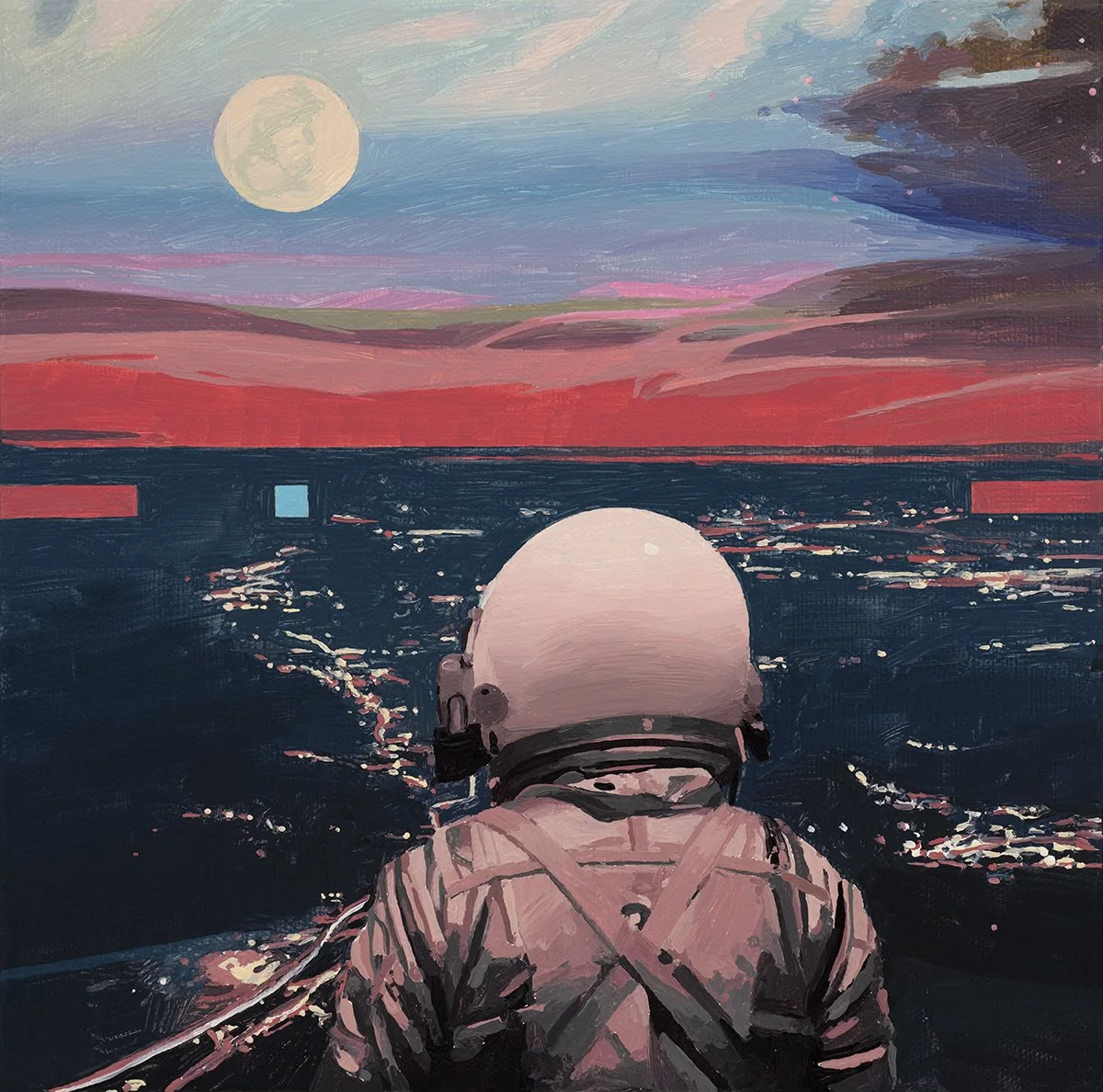
What is some of the best artistic advice that stands out to you from that time in your life?
Here's a quick story for you. I had a crit once with this guy named Charles Cajori. He was in his 70's at the time, at least. I was 19 at the time so he seemed much older than that even. He wasn't super famous himself, I think, but he had been friends with some of the big abstract expressionists in New York back in the 50's, and hung out in those circles. I can't imagine what someone like that would have to say to me about my mediocre ass still life paintings, in like my second ever painting class. But I do remember a story he told about Willem de Kooning, and it's one that I pass on frequently.
De Kooning was hanging out in a bar or something, and got introduced to this filmmaker who was very excited to meet him. He wanted to come by his studio and film him working sometime, and Willem said sure, come on by. So the guy comes over with his camera and films de Kooning, and the paint is just flying. He's dancing around, jabbing at the painting, flicking paint all over the place, it's wildly exciting and makes for great film. So a week or two later the filmmaker is back at the bar and bumps into de Kooning again and says “Hey! How did that painting turn out?” and de Kooning looks up from his beer and says “Oh, I scraped it all off as soon as you left.” and the guy is flummoxed, “Why would you do that??” and de Kooning says “That's not how I paint.” Turns out de Kooning usually just made one mark, then stepped back, sat in a chair, and stared at it for a long while. Which, he figured wouldn't make for great film.
Why do I love that particular story so much? I think because we have this romantic idea of making artwork, particularly when we're young and full of energy, that art happens all in the moment when you step in front of the canvas. When in fact, even the most expressionistic among us need to take the time to consider everything. So much of the work of making a painting happens before the brush even hits the canvas. That might seem obvious to some, but for me it took a while to understand.
Here's another story for you from that time. In college, my junior year, my best friend was this guy named Chris Ostoj. He was a couple of years older than me. He was way smarter than me and way way more worldly than me. So he was a friend, but also something of a mentor. He taught me to spend every waking moment in the art studio. He taught me to grind. That to be serious about art meant being REAL serious about art. One day, during a stretch where I was having a very rough go of it, as a particularly angsty teen, I filled a whole room with very moody self portraits for a crit I was going to have. It was more of a cry for help than it was an art show. Ostoj wanders in, quietly takes it all in, and looks at me with a slow grin spreading on his face. “Scott Listfield, colon” a long pause as he smiled again “Open Wounds.” And then he laughed. And then I, despite myself, also laughed. He taught me to be serious about art but also to (eventually) not take myself quite so seriously. And I think about that a lot, still. Scott Listfield, colon, Open Wounds is something I'm happy to say I've never actually titled a show, but it lingers there as a reminder of who I once was.
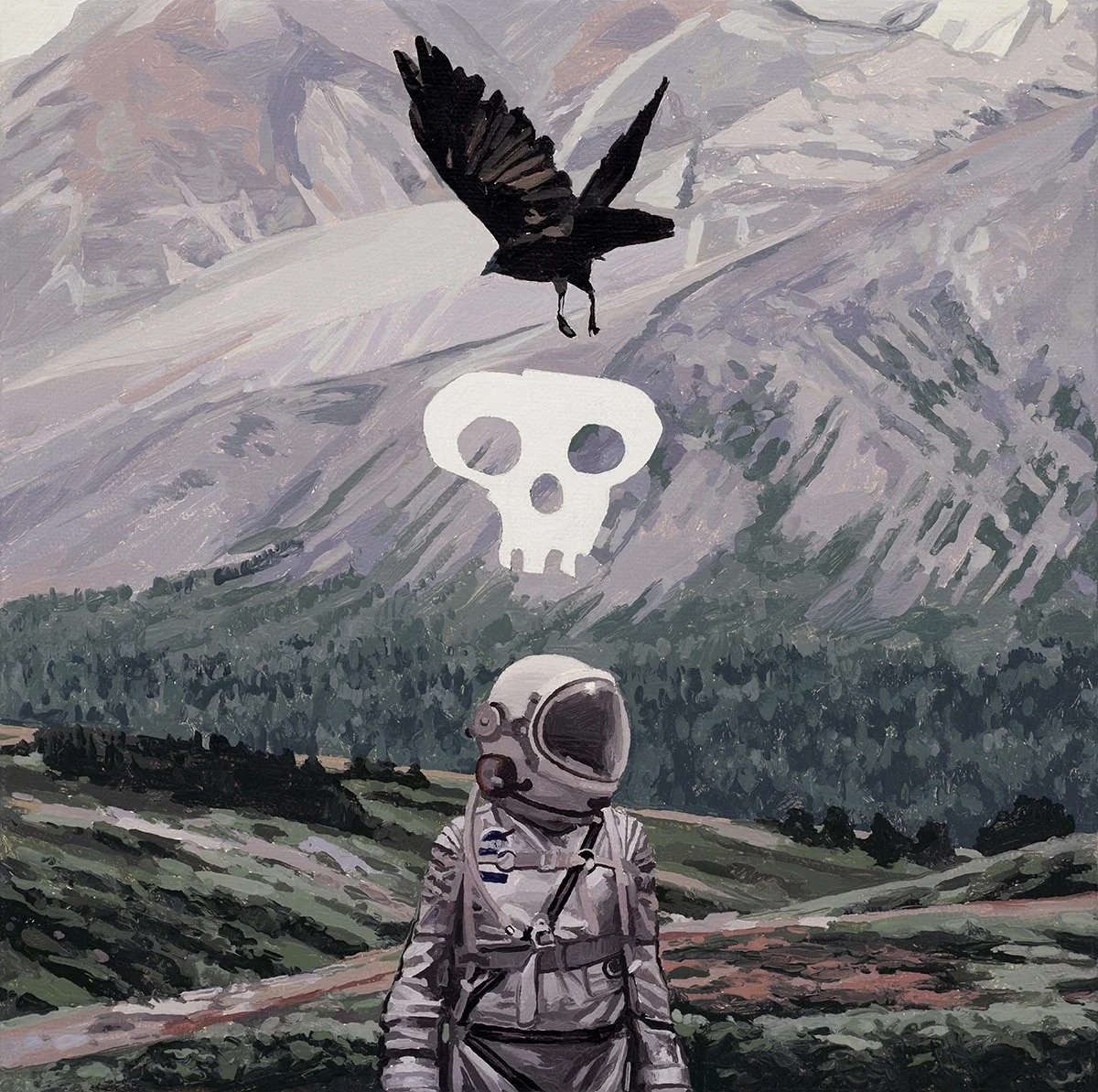
At what point did the astronaut begin making an appearance?
Almost exactly a year after I graduated from college. I've talked about this moment a lot, but I'm happy to do it again, because it's not every day that a single aha moment occurs which changes the rest of your life.
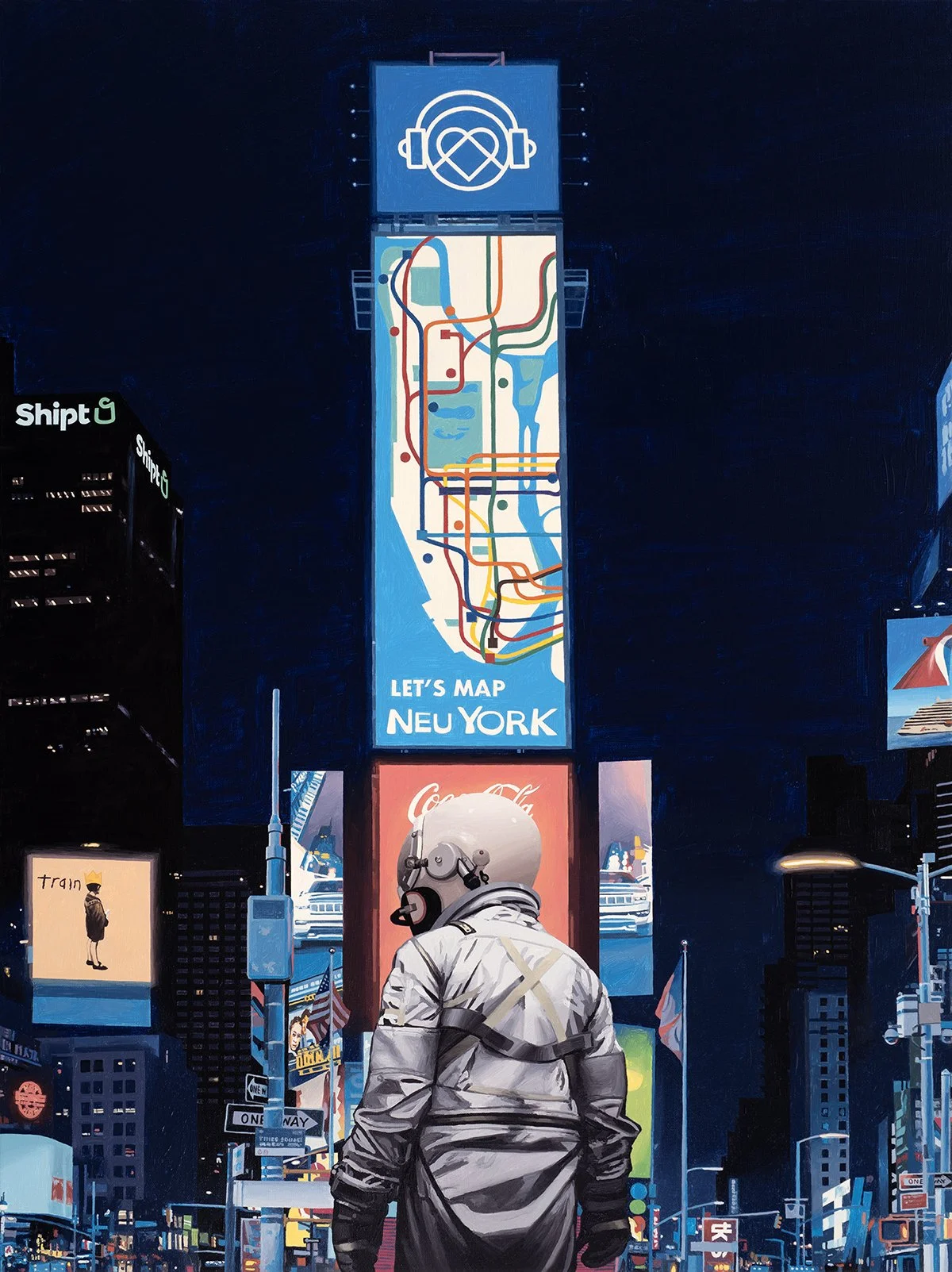
I had spent the year after college traveling some, living for a while in Sydney, then attempting (and failing spectacularly) to move to New York, and then eventually living with my parents in my hometown. Which was humbling, although also is an important step that a lot of us go through. In that time I had begun to outgrow the type of work I was doing in school, and began to reflect more on the time I spent abroad, particularly my experiences traveling alone. I wanted to make paintings that were about that experience. That were also about the experience of coming back home and yet still feeling like it was a foreign place. The feeling of being an alien in my own world. I thought of these paintings as short stories about the contemporary world, and I knew I wanted there to be a protagonist in each of them, but I wasn't sure who that should be. And then I watched 2001: A Space Odyssey for the first time and it all clicked into place. The character I was looking for was this astronaut, from the 2001 I thought I was going to grow up into, a futuristic place with flying cars and robot friends. And I would place this astronaut into the real 21st century, one filled up with Starbucks and fast food logos.
Did I know at the time that I'd still be painting astronauts 25 years later? Of course I didn't.
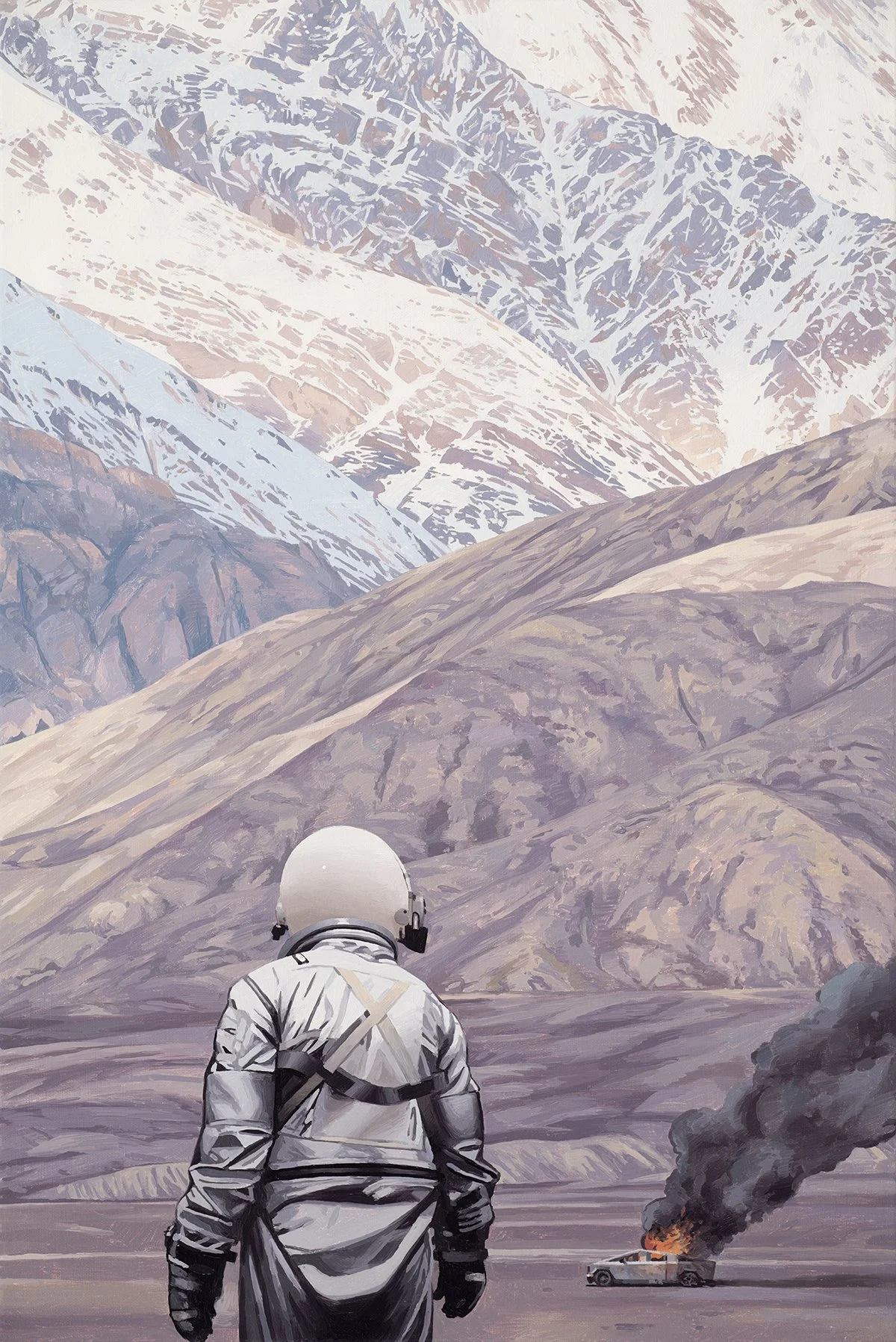
You lived in Italy, Sydney, and Boston (And now Los Angeles, more on that later). What are some of your memories from that time period in your life just after college? How did you balance working on your personal art and your day job back then?
Unsurprisingly, that was the most formative period in my life. I traveled for the first time, saw new and interesting places and met new and interesting people who would fundamentally change how I saw myself. I graduated college and two days later hopped a flight to as far away as I could realistically get. I returned to America, failed badly in the first draft of my adult life, and then, through a series of highly improbably circumstances, met the woman who would become my wife. Then I started a career which would provide me some stability for the next 15 years, while I also built up my art career on the side. All that happened over a period of maybe a year and a half. It's kind of wild to think about how much that time still shapes who I am now.
Coming out of college, I knew that painting angsty self portraits wouldn't pay the bills, and so I spent my time in Australia, after graduation, doing a couple things that I hoped might eventually lead to a job. I took some classes in design, and I interned at the Biennale of Sydney, a large international art fair. I enjoyed them both, but I figured (probably correctly) that working for a museum or gallery might eventually burn me out on the art world, so I chose to go into design. I tried to move to New York. It backfired spectacularly. I ended up, as I said, back living with my parents and taking some additional design classes in Boston. Eventually I got an extremely entry level job. And then, increasingly, more interesting jobs in design. I spent 15 years working full time.
And for a while, art was definitely on the back burner. It's hard to balance doing art while having a full time job. You have to make sacrifices. You have to really want it. And, if I'm being honest, for a long while I didn't. I was ok having a job that was somewhat creative, and maybe dabbling in painting every now and again. Five years out of college I had only maybe 8 or 9 weird astronaut paintings done, and I wasn't sure it was really going anywhere.
And then my friend Chris Ostoj passed away. I hate to be a downer, and I'll try not to dwell on this, but it's a major turning point in my life. I was maybe 26 or 27, and had never before dealt with the death of a friend, and never before seriously considered my own mortality. I didn't handle it well. But when I started to come out the other side of it, I took a close look at my art career to that point, which was not really a career at all. And you know, it's fine to decide you don't want that for yourself. I knew that. But I said fuck that, I want it. When my friend Chris passed, I looked back at our time together in school, how we joked (but in a non-joking way) about how we were going to go conquer the art world. And now, we couldn't. It was only me. And I decided I needed to at least give it a real try. And so I did. I got together enough paintings for a show. And then, fortuitously, I had a show. Did my career skyrocket from there? Absolutely not. There were more downs than ups to come. But it took something momentous happening to give me the push I needed.
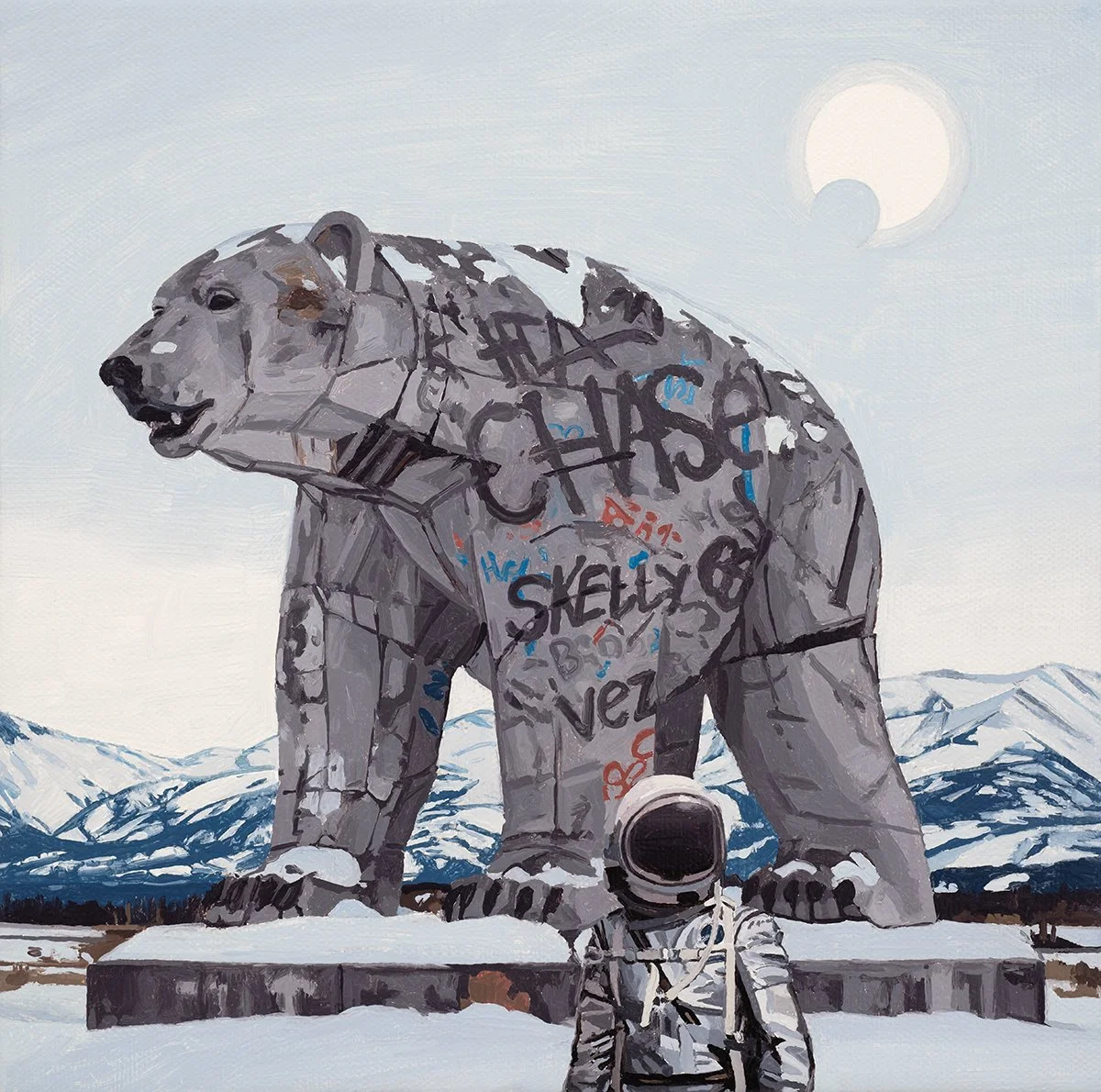
And so my friend Chris died. It's fucking sad and I'm still not over it. But I owe my art career to him. I still think about him all the time, and I regularly paint his name into my work as a bit of graffiti, in his honor.
Having seen a few videos and having a general idea of your process, it reminds me of Norman Rockwell or Frank DuMond’s process. Is there an artist’s method you studied that was the basis for your own?
Ha, ok, this is embarrassing, but I'm going to be honest. I have no idea what Norman Rockwell's process is. And I had not heard of Frank DuMond before today. So I have to say no, I did not study their process, nor did I study anyone else's process. And, if I'm continuing to be honest, most of my artist friends think that the way I make paintings is borderline insane.
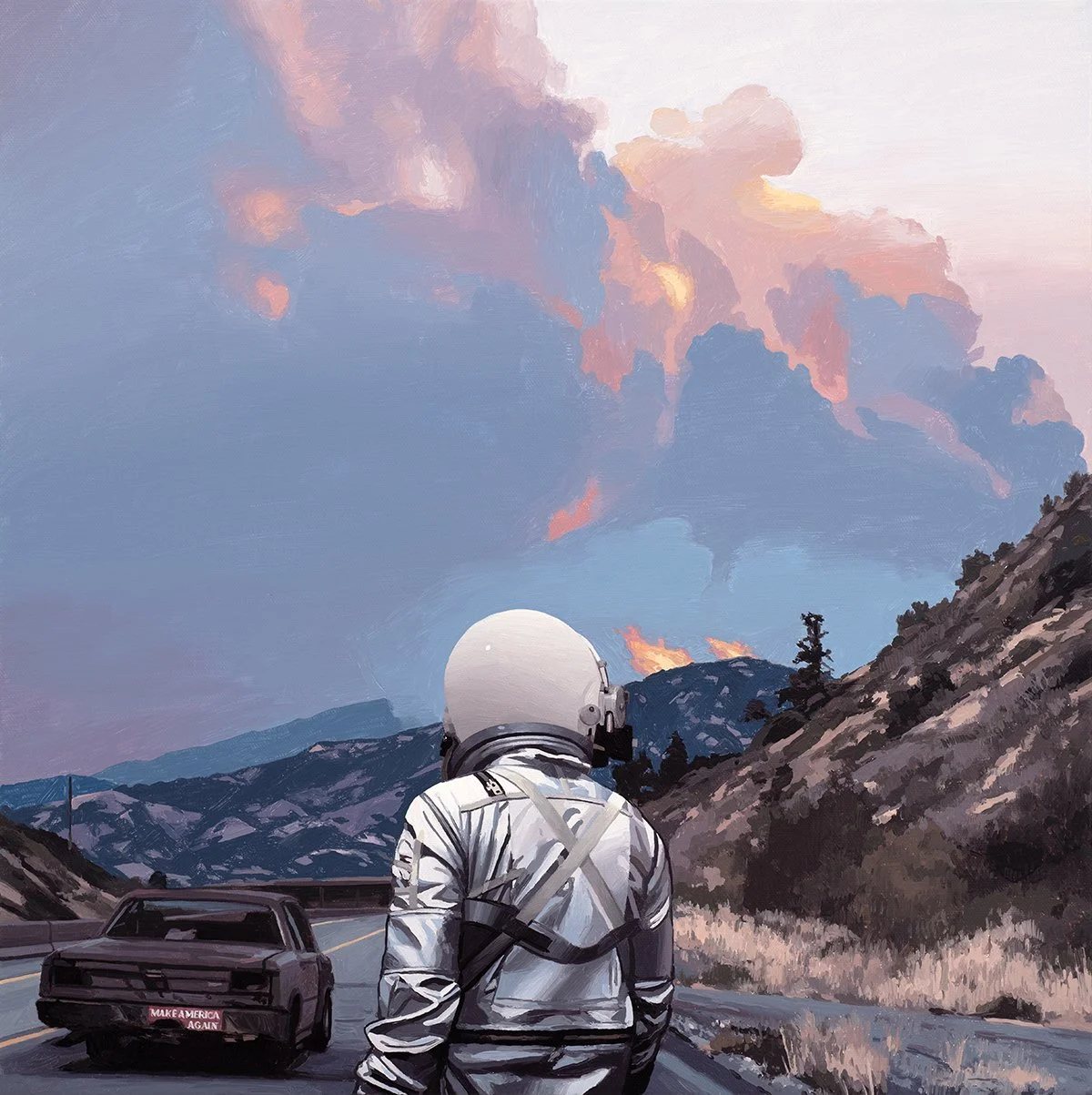
What is, generally speaking, your process?
So I have an idea for a painting. Ok, these days, I'm more often than not working on a show, which usuallyI like to have it's own theme: a very particular story that I'm telling. And so, really, I have an idea for a series of paintings, and then I start chipping away at the, But I'm already getting ahead of myself.
Let's go back to just one painting. I have an idea for a painting. I'll first mock it up on the computer. Blah blah blah. That part is not so interesting but is very important, and my time as a designer is pretty helpful in that part of things. I tend to be get specific in my mock ups. Once it looks good to me, I'll print it out and transfer it to a canvas. Things don't change much from the mock up to the paintings. But this is where the part that my friends think is insane comes in.
I start painting in the top left and finish painting in the bottom right.
And that's about it. If you speed it up in a time lapse, and I've posted a few of them to my Instagram, it looks like I'm a human printer. Did I model this after anyone else? Nope. Did I choose to paint this way? Also nope. I'm a big believer in your process - and to a degree your style - flows directly from the decisions you make about what your painting is. That's a roundabout way of saying it's not deliberate, it's a secondary function of how you choose to best make a painting. In the eraly days I was very expressionistic, but that didn't fit the type of paintings I wanted to make. I make fairly representational paintings that tell a story, and I find having a relatively crisp style is better for that goal. However I also made paintings for 15 years under the constraints of a day job, so I tend to be very efficient and economical in my mark making. I put in exactly enough to make the painting clear and legible and don't worry so much about things that don't add much to that goal. I also paint pretty fast, to keep everything wet, so that I don't have to be constantly remixing the same colors over and over again. Also, weirdly and stupidly, I like to paint with my hand directly on the canvas, making small brushstrokes with a tiny brush. And I'm right handed. And so I can't be dragging my painting hand through wet paint all day long. And so I start at the top left and finish at the bottom right. It's a logical way of painting that very few other people use, for a variety of reasons that are all entirely sane. Take of that what you will.
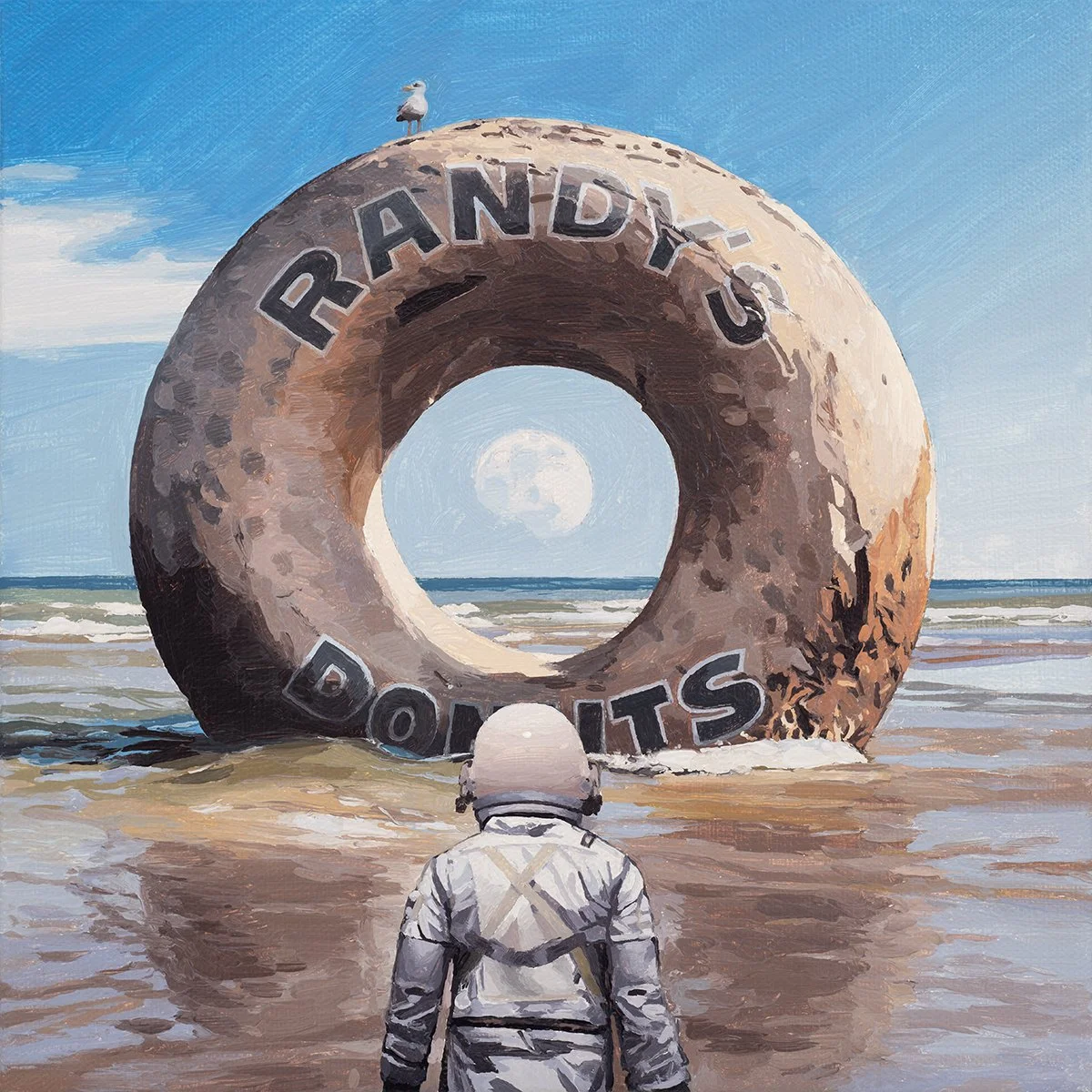
You’ve mentioned or suggested before that the astronaut functions as a self-portrait of sorts and while the imagery you create evokes themes of science fiction, your paintings are actually deeply personal. Could you explain how a particular work or works of yours act as “journal entries” as you’ve described them?
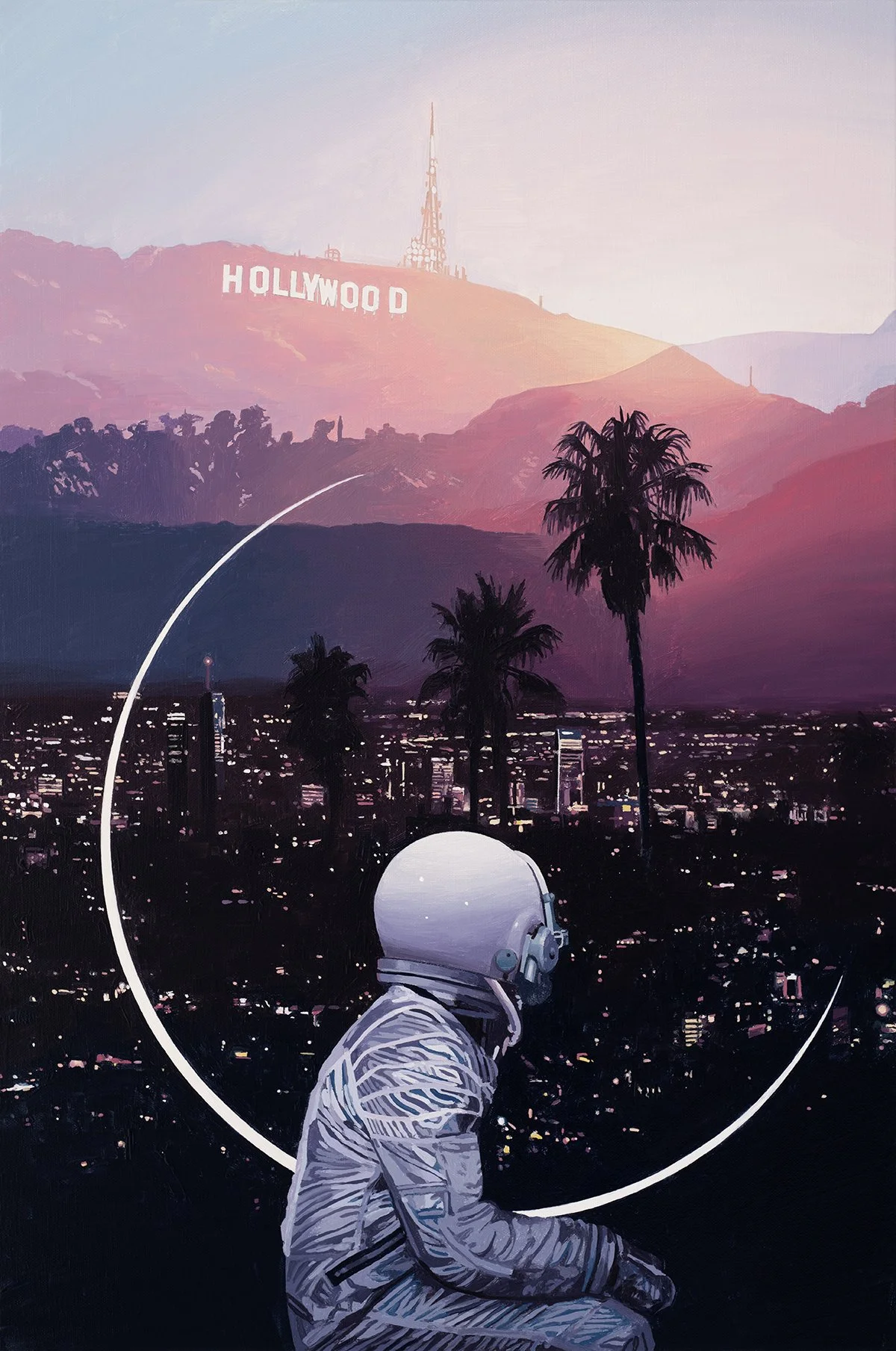
Well, to be fair, in the early days, my astronaut paintings were very much meant to be a departure of sorts from the self portraits I did in school. Are they still, to a degree, about me, and my experience in the world? Of course. Is the astronaut, in it's own way, something of a self portrait? I guess, although I very specifically wanted the astronaut to be somewhat open and blank, an empty vessel, so that anyone looking at my paintings could easily imagine themselves as the astronaut, exploring the world. The work itself has always been personal, in that it's very much my vision, but the work was rarely directly autobiographical.
In recent years, though, the stories I've been telling have gotten more personal. I have felt more comfortable telling stories that are based in my own experiences, and I like that the work has gotten more about my own life. I think – and this is really more of a hypothesis than anything else – that people respond to art that feels really authentic and personal. Often they will see some overlap in their own life, even if the details are not quite the same. Well, that's what I hope for, anyways.
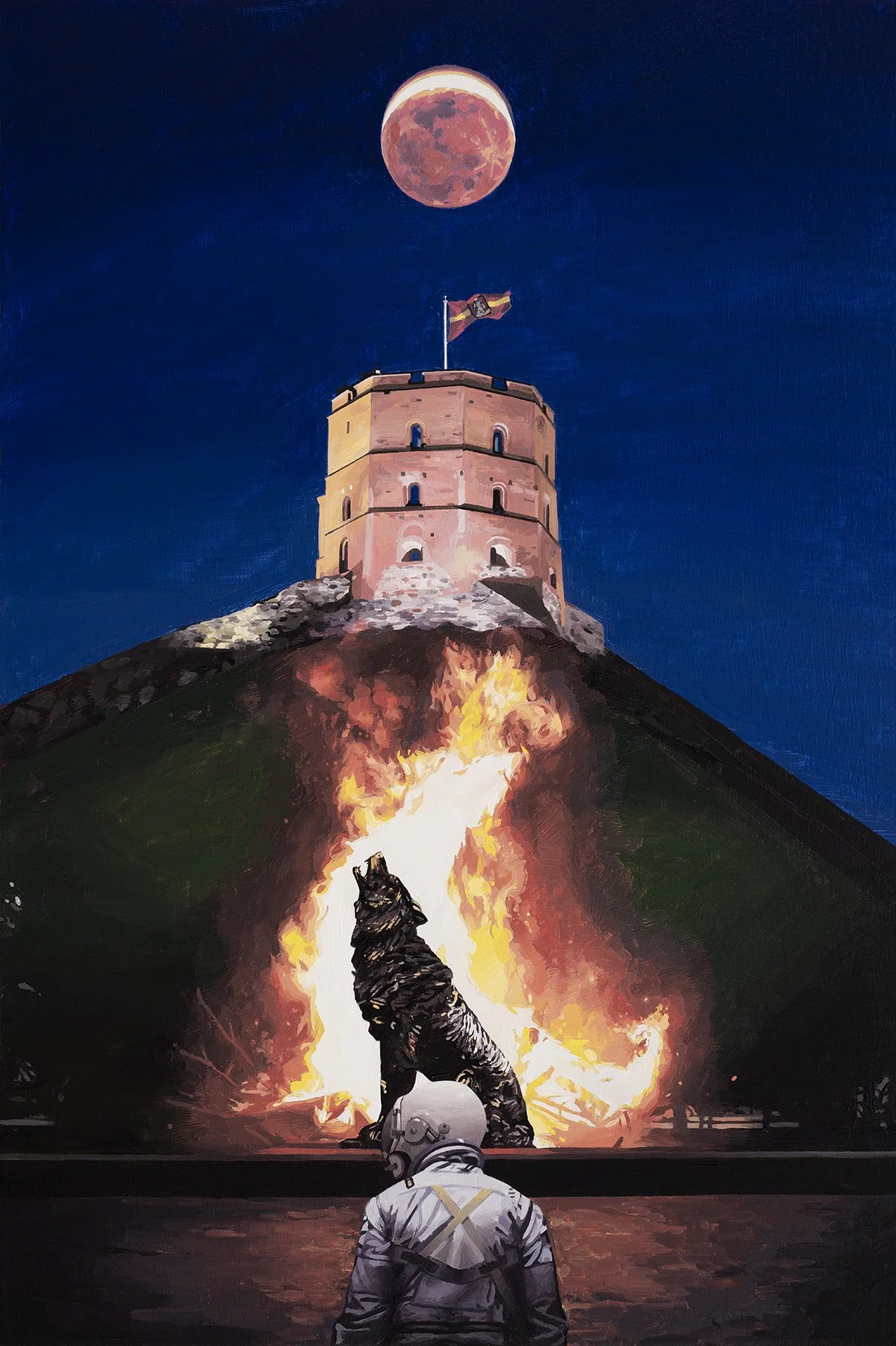
One of the more personal stories I told through my art came about after a trip I took a couple years ago. It started in Scandinavia, where I was supposed to be having a show with the folks from Antler Gallery. Tragedy struck just a few days before I left, and the show got rightfully postponed. I went on the trip anyways, but it left me feeling sad and reflective during the first part. In the back half of the trip, I met up with my brother and we traveled through Latvia and Lithuania, where some of our ancestors come from. It was a super personal trip, filled with life changing inspiring moments, and also places of tremendous sadness (like a whole bunch of Holocaust stuff, which I won't get into here). When I returned, I knew I wanted to make a whole show based on the things I experienced on this trip. It took me a little while to figure out how I wanted to translate that into my work, but I began with having the astronaut visit some of the same places I went, and included in each painting the figure of a wolf, which had become something of a mascot or recurring symbol on this trip, and which eventually I realized represented the lingering presence of my ancestors, hiding in plain site, at each stop along the way. Believe it or not, it was only after I was already well into making the paintings for this show that I realized that one of my ancestors was named Wolfe. And so this show became a really personal tale for me. Of visiting foreign lands, the kind that first inspired me to paint astronauts, but also of following a trail back in time along my own family tree. Which in this case was very much about me, but is an experience I think a lot of us can relate to.
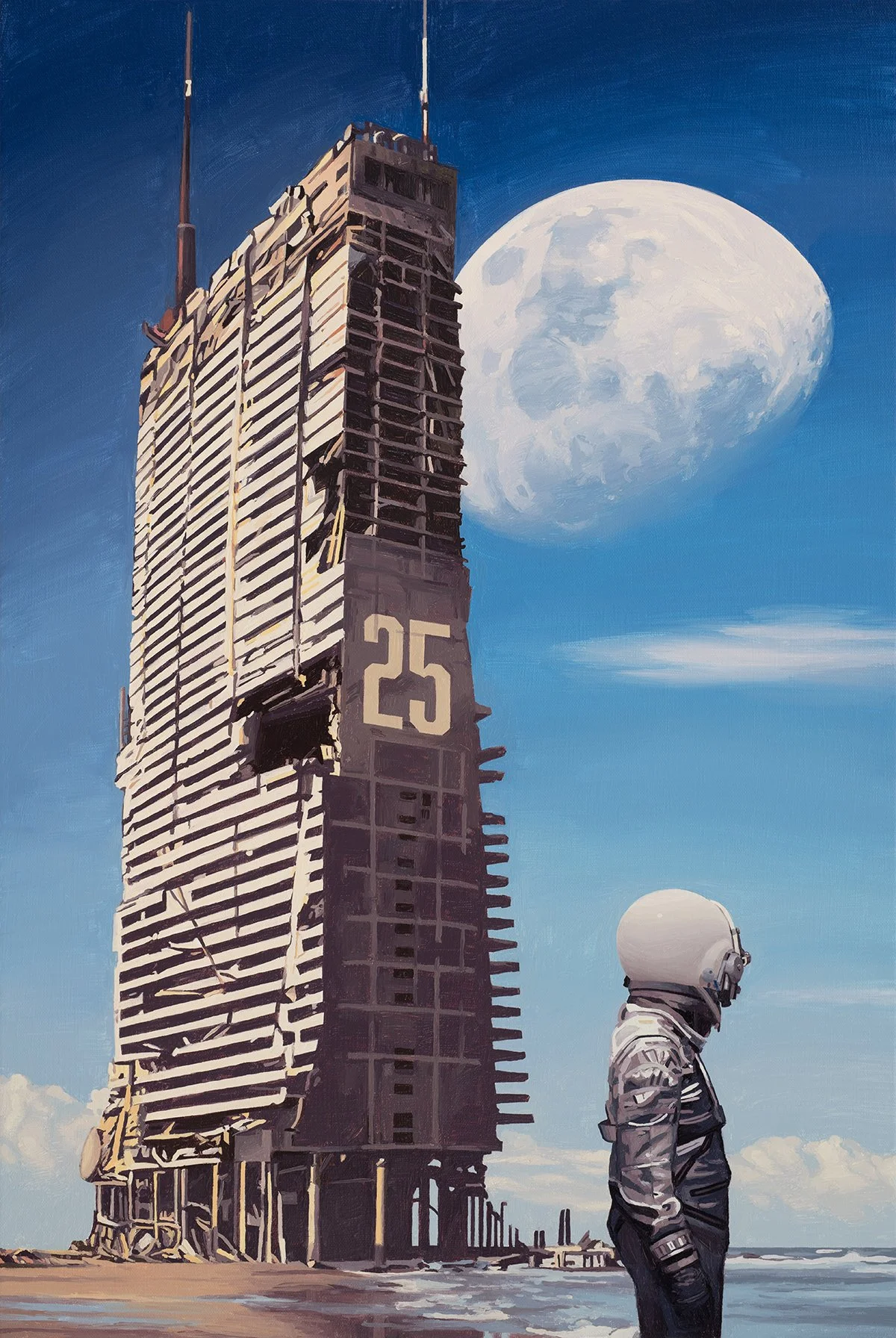
Do you ever create works in other genres on the side? For example, portraits or still life's?
Officially, no.
Unofficially, I will very rarely make a painting that does not involve an astronaut as a gift for someone very special to me (usually my wife). But those are very much one off's. I am very lucky in that my paintings allow me to send the astronaut wherever I want them to go. I can literally change absolutely everything about the painting, just as long as there is an astronaut in there somewhere. This allows me a lot more freedom to explore and stretch out than most artists, and so I rarely feel confined in what I do.
Have you ever mapped out all the locations that your astronaut has visited (on earth)?
Ha! No I haven't, but I do kind of like that idea. I imagine it will closely align with places I have been, and places where I have had shows, although I have also sometimes painted exotic places that I have never visited.
Do you keep a sketchbook?
Nope. It would be a lot cooler if I did, but I only have so much time, and I have a lot of paintings to make. Keeping a sketchbook doesn't fit into my process and so is unfortunately a luxury I don't have time for. I do think they are cool as hell though.
I was kind of shocked in doing research for these questions to discover that we were only introduced to each other in November 2013 via Ken Harman. Was he the first gallerist you started showing with?
Time sure flies, doesn't it? And I've worked with Ken for a long time now, and I've been lucky to work with a handful of people for over a decade now – Andrew at Thinkspace, and Neil at Antler. Jon at Beinart for a while now, too. But all of that is really from the 2.0 version of my art career. The 1.0 version goes back a lot further than that, although the early days were largely wiped out during the financial crisis in 2008. I had been showing with a gallery in Boston, and a couple elsewhere around the country, at that time. My art career was just starting to go some place and the '08 recession wiped out pretty much every gallery I worked with. And so I had to start again. I focussed at that time largely on galleries in California. Gallery 1988 in Los Angeles was the first place to really start showing me, and I had my first few west coast solo shows with them. From there I met Ken and Andrew and everyone else that's in the relatively small art scene that I'm in.
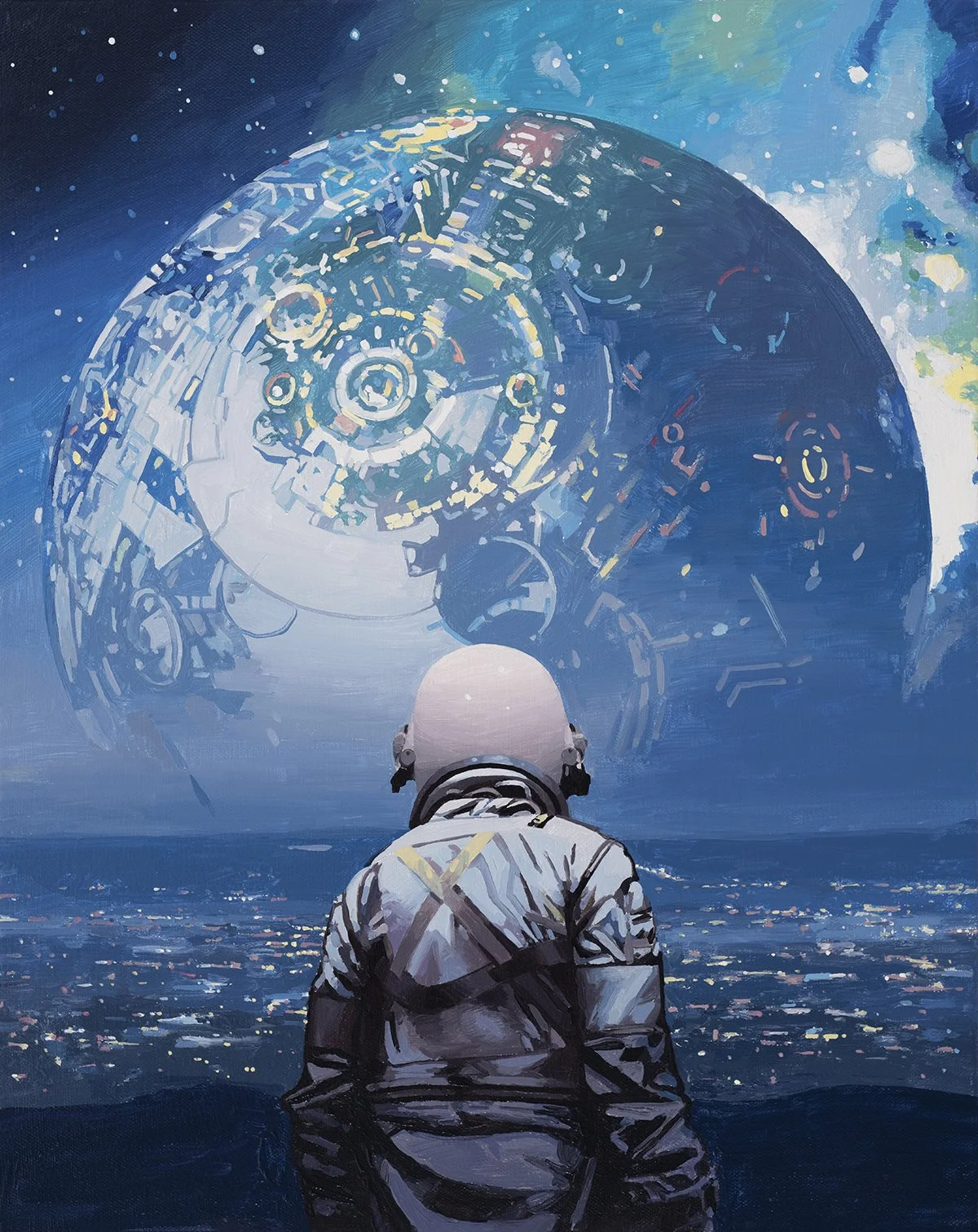
I think I saw your work in person for the first ever at White Walls or Gauntlet Gallery in San Francisco. That was only 12 years ago, but it seems like a totally different universe. When and why did you make the move out West to Los Angeles?
Oh wow, it really was. Both those places are long gone now, sadly in the case of Gauntlet Gallery, and less sadly for White Walls (which blew up in a particularly ugly fashion). I moved to LA, from Boston, around seven years ago, in October 2018. I grew up in Boston and had lived there for a very long time, but my art career was happening everywhere but there. I rarely ever showed in Boston anymore. Meanwhile I was flying out to LA once or twice a year, and grew to really love the art scene there. At a certain point I realized I had a lot more friends in LA than Boston. And also I was completely sick of winter. Didn't want to deal with it anymore. And so my wife and I moved out here. The weather is exactly as nice as advertised, the traffic is exactly as bad as advertised, and the art community has been tremendously warm and welcoming. Do I miss seasons? No, not even a little bit.
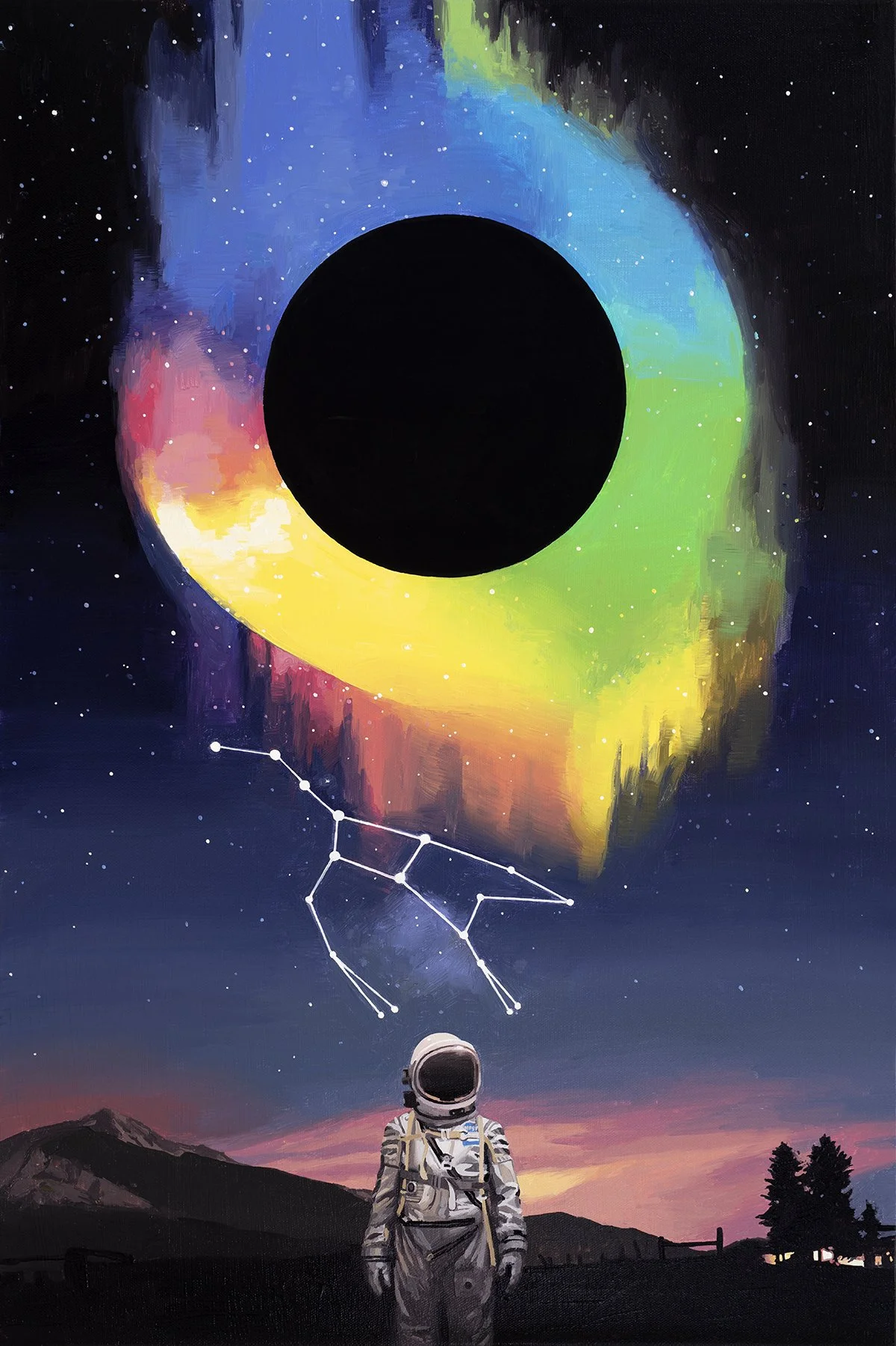
What are some of your current pop culture influences? For example: Reality TV shows? Crime Docs? Stranger Things? K-Pop Demon Hunters? What even is pop culture anymore?
You know, for a while there my artwork was very influenced by popular culture. Part of that was my own interests, and part of that was from working with galleries like 1988 and Spoke Art, where pop culture was a big part of what they do. I still really enjoy pop culture, but it has become slightly less of a driving force in my work, as more personal themes have taken it's place. And, as you hinted at, there isn't much of a mono-culture anymore. We don't share pop culture in the way that we used to. I haven't seen K-Pop Demon Hunters. I don't listen to Taylor Swift. I'm old now, too, so I have no idea what kids these days are into. The good news, I guess, is that because of streaming, the pop culture of years past is so much more easily accessible to younger people, and so things from 30 years ago are in some ways just as relevant. I went to a diner last night and my twenty-something waiter was wearing a Dinosaur Jr. T-shirt. And so I've been thinking a lot about how the pop culture of my youth is rebooted and recycled today, and also how pop culture (and especially music) from the past has shaped me as an adult. I think like everything, my deployment of pop culture in my work us still there but has become more personal.
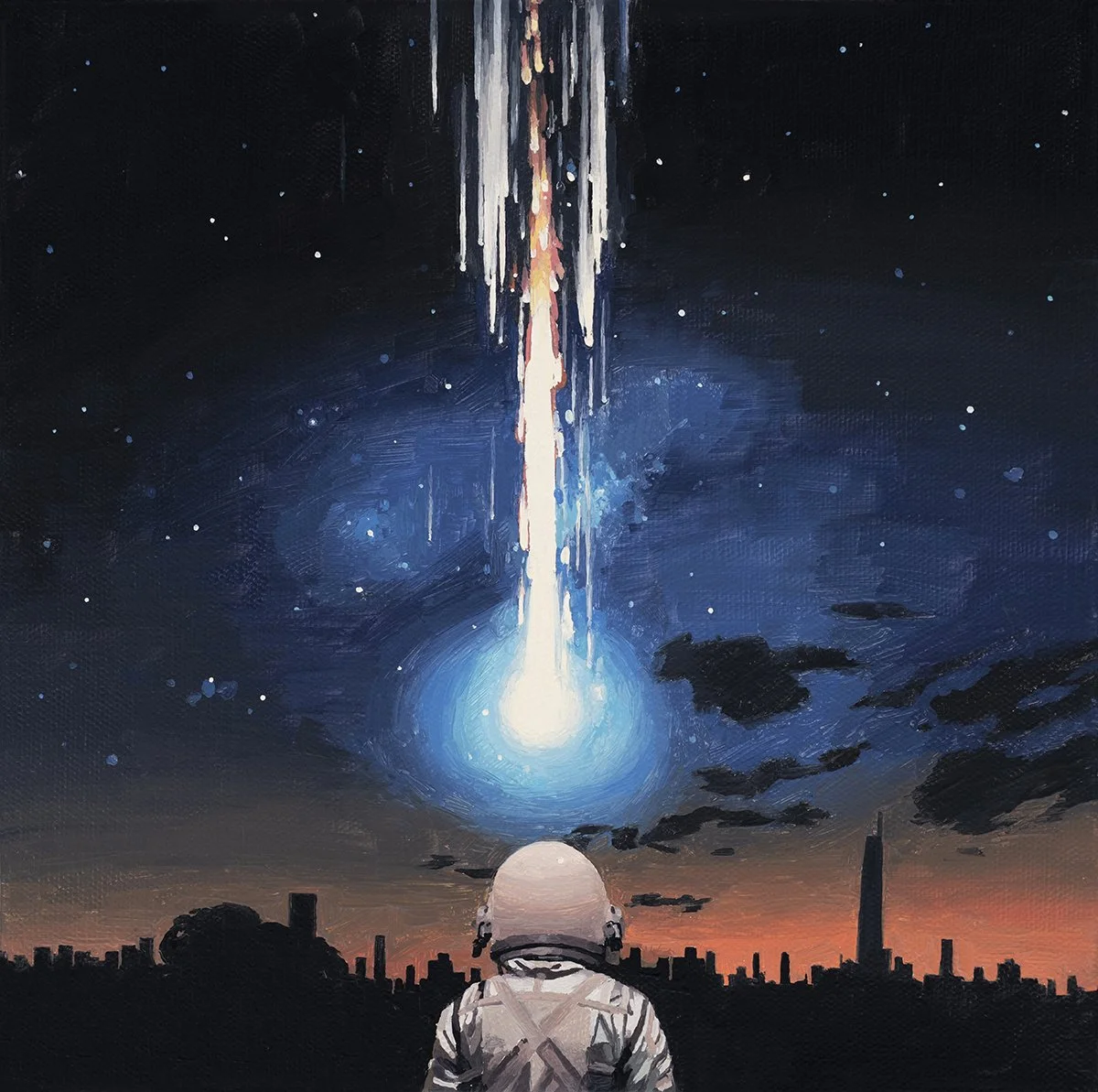
Speaking of culture, any insight or thoughts on how “influencers” and “creators” might be shaping the art landscape? (If at all?)
Nope. I've got nothing on that. Other than we are all, to various degrees, chasing the algorithm. Social media has for sure changed the way I make and present my art. Which is not entirely a bad thing (although obviously in some ways can be). At this point though, I care about people who are making art because they love it. If they are also good at being on camera, more power to them, but I don't care one way or another about folks who are mostly in it for the likes and subscribes.
It feels like, maybe, social media is more of a distraction than anything else but, then again, currently to be a successful artist promoting yourself on it is necessary. How do you deal with and cope with social media?
For a while it was a necessary part of the business of art, and I didn't mind it. I really like writing about my art, and I really like sharing my art, and I really like getting feedback about my art. More than at any point in my life, the heyday of social media felt like my paintings were a conversation between me and the people who followed me online, and I really like that aspect of it. I like the idea of art as a conversation.
But these days? I mean, social media has been in decline for a while, and everyone I know is tired of trying to chase engagement. It is what it is. Still a key piece but something I spend a lot less time worrying about. Unfortunately there really isn't' much else that's come up to take it's place in the meantime, so we're left with a time consuming thing that doesn't remotely have the reach that it used to.
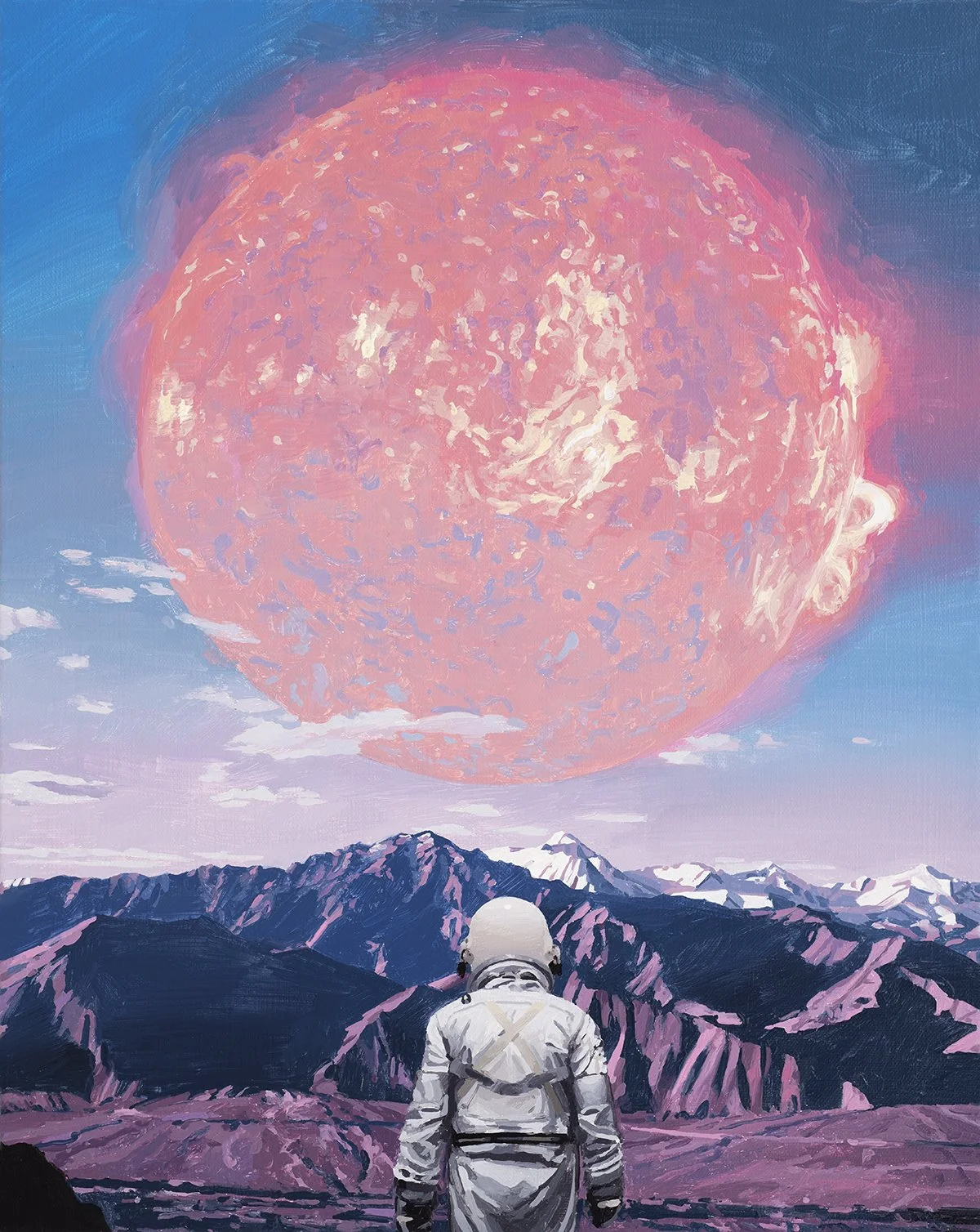
If you were to start reaching out to galleries in 2026 for the first time, knowing what you know now, how would you reach out?
That's kind of the question, isn't it? At least for those starting out in the art world. The honest answer is that there isn't a great way to reach out to them. The best way is for them to know who you are already before even making contact. Which feels very cart before the horse, I realize. How does that even happen? Well, mostly by doing the obvious things. Making work that is very personal, very singular, and (ideally) very good. By building up an audience yourself, online, or in person. By going in person to galleries you like (if you can) and getting to know the people who run them. By building your own community of artists you like and admire – online for sure, and in person, again, if that's available. That part is really key, because it will probably be a friend who curates you into a show, or suggests you to someone who runs a gallery. Or maybe you're the friend. If something comes your way, try your best to include people you know and like. I believe really strongly that part of the job description of an artist is to help others out whenever you can.
But know that gallerists are people, too. They get unsolicited emails all the time. Often from people whose work has not much to do with their gallery. They like looking at new artwork, but can't offer shows to everybody. And running a gallery is a business. They need to make money. They want to feel confident that showing your work might help them pay rent. And they're super busy people. And so try not to take it personally if they don't get back to you. You've got to have confidence in your own work first. If you keep making work you really believe in, eventually other people will, too. At least I like to think that's true.
Is there a question you’ve never been asked but would love to answer?
Probably.
What are your thoughts on AI? AI image creation? I feel like since your paintings are so closely linked to ideas of Science Fiction that you might have a unique point of view or, perhaps, you’ve spent a bit more time pondering its consequences?
I'm wouldn't exactly say I'm a fan of technology, but I'm also not a technophobe. A skeptic, maybe. Technology in my work often becomes a metaphor for both what we aspire to be, as humans, and also our own failings. Thinking that the future is driven purely by technological advances removes humanity from the story almost entirely. That said, I have long been an advocate for anything that makes an artist's life easer, and anything that gets our work in front of more eyeballs. I was a very early proponent of digital prints, back in the early days when my professor's generation thought that making a reproduction of your work cheapened the original. Likewise, I began using Photoshop and Illustrator ages ago to streamline my process, and I don't think my work would be possible without tools like that. And social media was an important tool for me for a long time. And still is, despite it's continuing to suck.
But, obviously, AI is different. Theft is kind of a major component of it. You could argue (convincingly) that theft is the driving concept. And beyond just those obvious moral objections, I have a real problem with humanity offloading its creativity onto machines. That feels like a dead end to me. Who are we as a society if we do that? What does that say about us? I think it clearly says that we have run out of things to say and do. And I, for one, don't believe that we have.
Now have I fucked around with AI? I have, although just a little bit. Does it occasionally produce something cool? Sure. I often paint things that don't exist, and so having a tool that could help me conceptualize those things is an appealing idea. But I've found that even in limited use, it becomes a crutch, and a pretty hollow one at that. Just slapping an astronaut in front of an AI generated image removes all of the creativity from what I do. And while that might generate a couple of neat looking paintings, it quickly leads to a creative dead end. Instead of thinking of new ideas I'm excited to paint, I'd just be typing shit into a box and hoping AI will generate something cool. And, more often than not, it doesn't even do that.
I did do a whole show a couple years ago about the idea that we're living in the last age where we can trust that photos or video are real, and that human creativity is (at least somewhat) a valued commodity. I do think that things made by human hand will always have a place in our society, but I worry that AI will wipe out whole creative industries, in particular ones that an artist might use to help make them some money. Like, say, illustration, or design. And if young artists have no way to get a creative day job, like I did when I was younger, how will they ever be able to then develop their art career? Pretty sure the answer is: they won't.
But, as someone who also worked in the tech world – weirdly enough, my last full time day job as a designer was working for Twitter, well before the Elon days – I also know that AI is largely hype. Like anything in the tech world, it's a lot of hot air used to prop up stock prices and justify spending absolutely hilarious amounts of money. Does anybody else remember how blockchain was going to revolutionize the world? There's a good chance that in five or ten years, the bulk of the tech world will have moved on to some other thing and AI is, like anything else, just a tool that some people occasionally use. But hey, who knows. I've learned never to underestimate what horrible ideas from science fiction people will try and make a reality.
I know a lot of younger artists have talked to me about being accused that their work is AI (This is more common with digital artists I talk to and my advice to them is usually just to get to work and stop worrying what other people think). Have you been accused of this If so, what is your advice to anyone dealing with these sorts of things?
Thankfully, no, at least to my knowledge. But in the (largely justified) backlash against AI, I have seen people accusingly fling around that label on artists who I have no idea if they are or aren't using it. That feels like a pretty hostile environment, and I for one don't like accusing people of things I don't know for sure they did. That said, if you're a young artist, know that using AI is a really cheap shortcut. It might save you some time, but is it worth it? If your work is obviously AI, I'd say it has failed creatively already. That means it looks like regurgitated and/or stolen ideas, whether it is or it isn't. But hey, when you're young, regurgitating and stealing ideas is exactly what you do. So yeah, I'd agree with you: just keep working and ignore what other people are saying.
That said, there are ton of really great, established artists whose work has been so thoroughly copied by AI that it has become a language that is no longer theirs, and that is truly sad. They then suffer the additional indignity of being accused of being AI, because their work looks like AI, because AI stole their work.
I have so far been lucky, in that my work is a lot less defined by any particular style. I think my work is recognizable more by tone and by it's subject matter. That is something that – again, so far – AI has been less adept at copying. So I've managed to stay out of it so far, but I assume my time will come eventually.
Circling back to your process really quickly before I ask my last few questions, I absolutely love your use of color. Do you have any particular method of mixing your colors that you’d like to share?
Thanks! I use a pretty minimal palette, and have for years. I'm sure there's a more practical way of doing things, but I like knowing exactly what each color looks like mixed with each other color. They've become second nature to me, and so I don't need to think too hard when mixing. I actually think it comes from my time as a designer, when I'd use simple RGB sliders to fine tune colors. Anyhow, here's my regular palette: titanium white, cadmium yellow pale, alizarin crimson, cerulean blue hue, ultramarine blue, and ivory black. That's what I use for like 95% of my painting. I do occasionally need other colors to supplement it, like a vibrant purple which I can't mix from those, so I use manganese violet for that. Very rarely I'll need a pink or a magenta or a teal or a green, and I've got some miscellaneous (and mostly very old) tubes that I'll use for that. But mostly I stick my core colors. Oh, and those are all oil paints. Don't ask me for advice about acrylics, I have absolutely no clue.
What are some secrets of Los Angeles that you’ve discovered living there? What are your interests outside of art?
So this is definitely not for everyone, but something that started as a pandemic hobby for me became something much bigger: I climb stairs. In certain hilly neighborhoods in Los Angeles, there are stairs carved into the hillsides. Most were built around a hundred years ago, in order for the people living on those streets to get down and catch the red car trolleys - which in the time before cars, ran up and down the main streets below the hills. There's one right on the end of my street, and as soon as I moved here, I wanted to climb it. My wife bought me a book called Secret Stairs, which had walking routes to visit many of these stairways and, over the course of a few months, I did them all. I then found an online group called Socal Stair Climbers, which has many longer maps and routes. Initially I did them on my own, but then I started meeting up with other like minded stair climbers and ended up meeting some truly great people. Eventually we all completed a 300 mile loop around greater Los Angeles which covers most of the stairs in the area. Not all at once, mind you - it took me over a year to complete it in 10 mile increments. But that's become my regular hobby outside the art world. It is very weird and very particular and not for everyone – kind of like me.
And lastly, what can we look forward to from you in 2026?
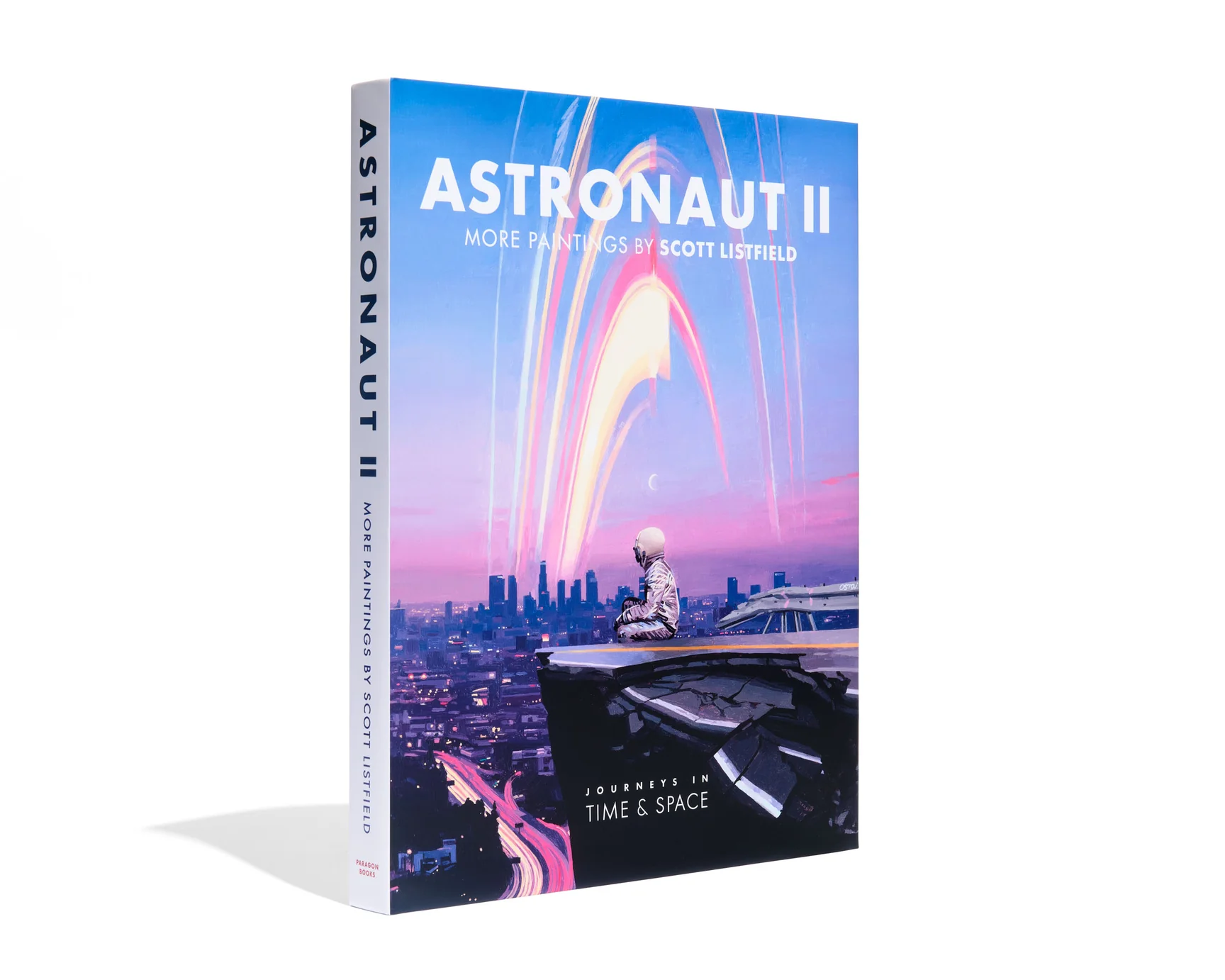
My second book, Astronaut II: Journeys in Time & Space (Also available on Amazon) just came out from Paragon Books, so keep an eye out for that, if you like paintings of astronauts. Beyond that, I've got an uncharacteristically quiet 2026 lined up. I usually keep a pretty aggressive schedule of solo shows, typically two or three a year. But this year I wanted to try taking my foot off the gas just a tiny bit to see how it feels to, I don't know, have free time every now and again. So I've got a bunch of groups shows, and then my next solo show isn't until next November, at Thinkspace Projects, here in Los Angeles.
SHARE THIS ARTICLE
Previous Post: